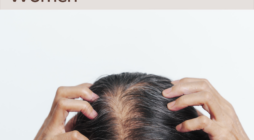



Ever have your hair pulled? Hurts doesn’t it? That pain is your hair follicles screaming at you. When your friends said keep it tight, they weren’t talking about the tightness of your pony. If your hair is pulled so tight you have soreness or redness of the scalp, your hair follicles are probably being affected.
Ponytail Bald better known, by its scientific name traction alopecia, is a form of hair loss which occurs from repetitive pulling of those tightly bound locks.[1]
What Is Ponytail Bald?
Ponytail bald is a form of hair loss which occurs from increased tension on strands of hair. Constant pulling from a tight ponytail puts pressure on the hair follicles. For ponytails, the most affected areas tend to be in the front of the head, leading to temporal and hairline recession. This constant pulling can eventually lead to inflammation of the hair follicle, followed by hair thinning and eventually patches of hair loss.[1]
Traction Alopecia
Traction alopecia and “ponytail bald” are essentially synonyms. Ponytail bald refers to traction alopecia specifically from ponytail use.
Traction (Tension) + Alopecia (Hair Loss) = Hair Loss From Tension
While we love the catchiness of the “ponytail bald,” any tightly pulled hairstyle can lead to traction alopecia. Some higher risk tight hairstyles include:
- Tight braids
- Hair extensions
- Cornrows
- Weaves
- Dreadlocks
Friction Alopecia
Friction alopecia is a similar cause of hair loss as traction alopecia. Both represent types of alopecia caused by physical damage to the hair follicle and scalp. While traction deals with tension injury to the follicle, friction deals with pressure injury to the follicle.
Friction (Pressure) + Alopecia (Hair Loss) = Hair Loss From Pressure
Occurrences of friction alopecia have been reported with headphones, balance beam gymnastics and from repetitive exposure to tight fitted clothing.[2]
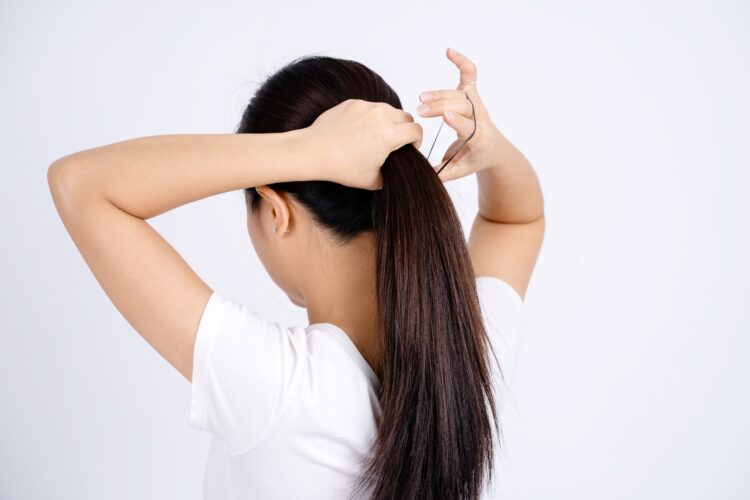
How Do Ponytails, Buns and Braids Lead To Hair Loss?
Traction alopecia has both temporary short-term implications and permanent long-term implications if left untreated. Luckily, wherever you are on this journey there are available hair restorative solutions. While some genetic considerations may lead to a predisposition, the root of the problem for this type of alopecia is mechanical.
Short-Term Effects
Constant tension on the hair follicle eventually leads to inflammation of the hair follicle, also known as folliculitis.[3] Continued inflammation can then lead to follicle miniaturization. Follicle miniaturization is a process resulting in progressive miniaturization of the hair follicle with each passing hair cycle[4] Inflammation causes hair follicles to miniaturize by causing the affected follicles to go from the anagen (growth phase) to the telogen (rest phase).[4]
Additionally, the inflammation affects the dermal papilla cells of the hair follicle. This region is responsible for the signals resulting in hair growth, new hair generation and the size, color, shape of the resulting hair.[5]
The good news is while you are seeing the effects in the mirror, what we do not see is that those follicles are still alive and very much capable of recovery.[3] Don’t fret, with a little hair care, healthy hair is right around the corner. Most important concept is to know these effects are temporary but they may proceed to permanent hair loss. Importantly, know where you are in the journey and empower yourself with knowledge of the options.
Long-Term Effects
Longstanding traction alopecia leads to continued inflammation in the hair follicle. Longstanding inflammation on the hair follicle will eventually lead to scar tissue replacing the hair follicle. This ultimately leads to “follicle dropout” which means the follicle is no longer subject to the hair growth cycle. This type of hair loss, referred to as scarring alopecia, is no longer reversible without surgical management.
Who Is Affected By Traction Alopecia and Friction Alopecia?
Riskiest Hairstyles [1,3]
- Tight Ponytail
- Tight Bun
- Cornrows
- Dreadlocks
- Locks
- Extensions
- Weaves
- Tight up-dos
- Tightly Braided Hair
Other Risk Factors[1,3]
- Head Wear ( Religious, Casual, and Occupational)
- Wig
- Nighttime Hair Wrap
- Chemically Straightened Hair
Cultural Implications
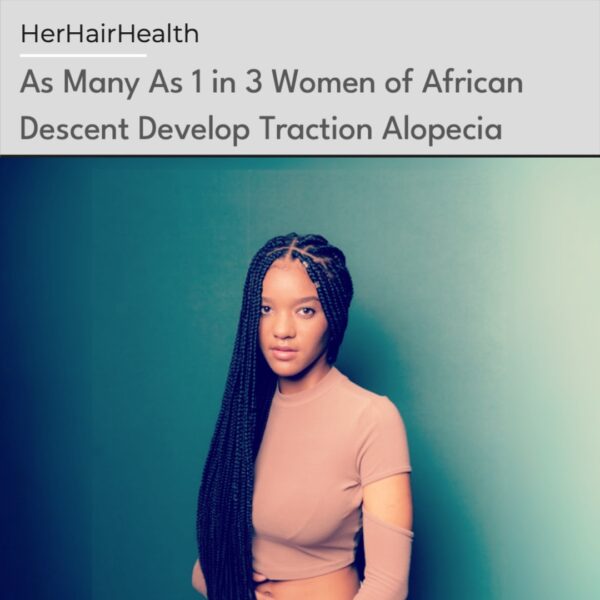
Traction alopecia can occurs across ethnicities, genders and ages. There tends to be disproportionate prevalence of traction alopecia in women of African descent. While there are distinct differences in the shape of the hair shaft which may predispose women of African descent to traction alopecia, the majority of the effect is likely from hair care practices.[1,6]
While the prevalence of traction alopecia is difficult to measure, several studies have reported nearly 1/3 of African American girls being affected by traction alopecia.[6]
Signs To Look For
Early Signs
- Soreness
- Hair Follicle Redness
- Raised, Dry, or Flaky Scalp in Affected Areas
Marginal Traction Alopecia
- Loss of Hair From The Front and Temples
- Fringe Sign: Thin Patch of Hair At Hairline with Loss of Hair After
- Hair Thinning, Hair Breakage and Eventually Hair Loss
Non-Marginal Traction Alopecia
- Patchy Hair Loss in Less Commonly Affected Areas
Traction Alopecia Treatment Options
The management of traction alopecia is specific to where in the journey your follicles are. Early traction alopecia is reversible where persistent traction alopecia can lead to permanent hair loss. Reversible hair loss and permanent hair loss have different strategic approaches.
Temporary Hair Loss Treatment Options
- If possible, release of traction on hair shaft.
- Avoidance of chemical and thermal treatments and traumatic hairstyling. .
- Upon the presence of redness (folliculitis)
- Steroids injected into the area
- Antibiotics oral or topical
- Topical Minoxidil[6]
- Are Exosomes and PRP options?
Permanent Hair Loss Treatment Options
Once the hair follicles have been scarred, hair growth is no longer reversible. The good news is, there are still options. With hair transplantation, more importantly the advent of No-Shave Follicular Unit Extraction (FUE) procedures, women can restore their hair with fast recovery and undetectability. Of note, hair transplants are permanent solutions and should be entertained once it is certain the hair loss is permanent and not reversible.

Need For Diversity and Inclusion Considerations to Treatment Paradigm
A simple Google search for “how to treat traction alopecia” yields the most logical and common answer of: “stop using that hairstyle.”
As we learned, traction alopecia is from causing too much tension on the hair shaft and ultimately the follicle. Definitely, if we stop causing the tension we improve the problem. Unfortunately, this is not a solution for everyone.
As our general healthcare apparatus tends to do, we are applying solutions which may not bee available to all of us. What the just stop doing what’s causing it philosophy doesn’t consider is the context that is people.
For many of us, the way we don our hair and the headwear are very much a big part of what makes us, us. Whether cultural implication of descent, religious implications of belief or social implications of community; our head and hair speak volumes beyond style.
What the just stop doing what’s causing it philosophy doesn’t consider is the context that is people. To adequately address the issue of traction alopecia, we must first understand the symbolic importance embodied by our hair styles.
Conclusion
Frictional and Traction Alopecia are form of hair loss caused by mechanical forces. Tension on the hair shaft leads to inflammation of the hair follicle with eventual temporary, and then permanent, hair loss. While certain predisposing genetic factors exist in traction alopecia, the cause of hair loss is mostly secondary to the effects of mechanical forces. While a plethora of treatment modalities exist, there needs to be an increased awareness from health care practitioners in regard to the social/cultural implications of how we wear our hair.
References
Larrondo J, McMichael AJ. Traction Alopecia. JAMA Dermatol. 2023;159(6):676. doi:10.1001/jamadermatol.2022.6298
Ely PH. Balance Beam Alopecia. Arch Dermatol. 1978;114(6):968. doi:10.1001/archderm.1978.01640180098043
Akingbola CO, Vyas, J. Traction Alopecia: A Neglected Entity in 2017. Indian J Dermatol Venereol Lerpol 2017; 83:644-649
Messenger AG, Sinclair R. Follicular miniaturization in female pattern hair loss: clinicopathological correlations. Br J Dermatol. 2006 Nov;155(5):926-30. doi: 10.1111/j.1365-2133.2006.07409.x. PMID: 17034520.
Morgan BA. The dermal papilla: an instructive niche for epithelial stem and progenitor cells in development and regeneration of the hair follicle. Cold Spring Harb Perspect Med. 2014 Jul 1;4(7):a015180. doi: 10.1101/cshperspect.a015180.
Billero V, Miteva M. Traction alopecia: the root of the problem. Clin Cosmet Investig Dermatol. 2018 Apr 6;11:149-159. doi: 10.2147/CCID.S137296. PMID: 29670386; PMCID: PMC5896661.
American Academy of Dermatology Association. “Hairstyles that pull can lead to hair loss.” https://www.aad.org/public/diseases/hair-loss/causes/hairstyles