
Signs of Hair Loss in Women
How Much Hair Loss Is Normal?
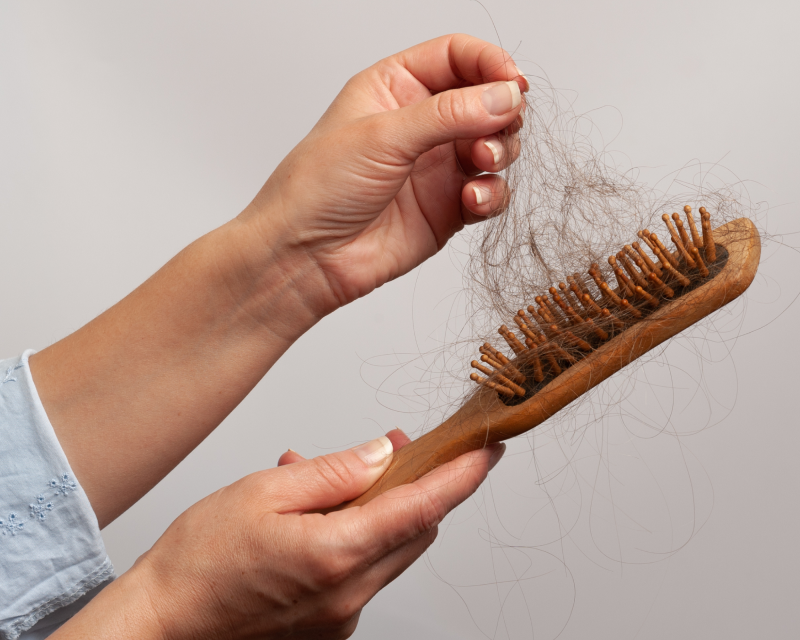
Knowing the signs of hair loss and figuring out what is normal hair loss in women, and what isn’t, is complicated. The average hair loss in women is 50-100 hairs per day. That’s called hair fall, and refers to the predictable and typical process of growing and shedding hair throughout life. In certain seasons, you may notice greater amounts of hair loss. If you aren’t sure if the cause of hair loss is typical, try the at-home Hair Pull Test.

The Hair Pull Test
- Hold a clump of 40-50 hairs near your scalp. That’s not too thick and not too thin.
- Pull outward, allowing hair that is rooted to stay connected, and pulling any loose hairs away in your hand.
- 3-6 hairs would be considered typical; multiples of that (closer to 9-18 hairs) would be considered non-typical types of hair loss.
When Hair Loss Happens
The seasons of life impact type of hair loss conditions implicated. You might notice increased hair loss in times of:
Female Pattern Baldness
The most common type of hair loss known by medical term female androgenetic alopecia, leads to gradual miniaturization of hair follicles and general thinning through out life. Affects 1 in 3 women in the United States through life leading to gradually less hair on top of your head.
Stress
Physical or emotional stress, including surgeries, chemotherapy, severe illnesses, or emotional traumas, as a side effect, can lead to a temporary condition known as telogen effluvium, where sudden hair loss may occur. Mental health and wellbeing are becoming more and more accepted as a significant risk factor for hair loss.
Hormonal changes
Hormone level fluctuations due to pregnancy, childbirth, menopause, or thyroid problems can cause temporary or permanent hair loss by disrupting the hair growth cycle. Polycystic ovarian syndrome (PCOS), which affects androgen levels, can also lead to hair thinning.
The Signs of Hair Loss
You might find yourself thinking, “My hair is so thin I can see my scalp.” Or, “is it normal for women to see their scalp through their hair?” You aren’t alone. Approximately one third of women experience female pattern hair loss (FPHL) at some point in their life. When you include other causes of hair loss, that number goes up to two thirds.
Female pattern baldness, the most common cause of hair loss, usually starts to appear near the center with a widening part. In the middle and later stages of FPHL hair loss extends down on either side of the part and toward the front of the scalp. Women tend to experience global hair loss, which is an overall loss, rather than focal hair loss in a specific section, such as bald spots and receding hairlines that is common in male pattern baldness.
Are There Any Early Indicators That Can Help Identify Hair Loss In Women?
Some early signs of hair loss in women include increased hair shedding in the shower or on your pillow, widening of the hair part, general hair thinning, and noticing smaller ponytails. Consulting a hair surgeon, primary care physician or dermatology if you notice these signs can help in diagnosing the pattern of hair loss and treating it effectively.
Hair Thinning vs Hair Loss
Signs you have gone from hair thinning to advancing hair loss can include:
- An increased number of hairs falling out daily
- Patches of thinner or missing hair
- Seeing your scalp through your hair
- Tying up smaller ponytails
- Feeling your hair break off
Signs of Hair Loss From Causes Other Than Androgenetic Alopecia
Alopecia Areata
Alopecia areata is an unpredictable autoimmune condition that can lead to hair loss ranging from small patches to complete baldness. Here’s what you might notice:
- Oval Bald Patches: Sudden, smooth bald spots that are often round or oval in shape on the scalp or other parts of the body.
- Hair Loss in Different Areas: This can include eyebrows, eyelashes, and body hair, not just the scalp.
- Nail Changes: Some people with alopecia areata notice pitting or other nail changes.
To learn more about signs and treatment options, American Academy of Dermatology (AAD) provides valuable insights.
Traction Alopecia
Traction alopecia happens due to stress on hair from tight hairstyles, like braids or ponytails. Early signs include redness or soreness of the scalp, and you might spot little bumps or even some scaling. As Healthline mentions, it’s crucial to change hairstyles to reduce tension, as prolonged stress can lead to permanent hair loss. If you find thinning primarily at your hairline or where the hair is pulled back the tightest, it may be time to reconsider your styling habits.
Hair Loss Related to Medical Conditions
Several medical conditions can lead to hair loss, either temporarily or permanently. Recognizing these signs is crucial for diagnosis:
- Sudden or Patchy Hair Loss: This could be linked to health issues such as lupus or thyroid problems.
- Hair Loss After Illness or Stress: Post-illness recovery or high-stress periods can lead to significant, though usually temporary, hair shedding. PCOS may lead to increase in hair in other part of the body and lead to findings such as acne or menstrual irregularities.
- Nutritional Deficiencies: Lack of essential nutrients may lead to weak or thinning hair.
Understanding the root cause can help in effectively managing hair loss. Websites like Harvard Health offer comprehensive information on hair loss related to medical conditions.
By paying attention to these signs, you can take proactive steps towards treatment and regrowth.
When Should I Seek Medical Advice for Hair Loss?
No one knows your body, and your hair, as well as you do. If you feel a change is happening in your hair and you aren’t comfortable with the feeling, talk to your primary care physician. Because your hair is a part of your whole system, you might also talk to a naturopath, hair transplant provider, dermatologist, trichologist, or barber.
Related Articles
SEE ALL
Understanding Hair Shedding and Hair Loss: What You Need to Know
by Dr. Michelle Ischayek May 17, 2024

Stay Trending
Join our newsletter for expert tips, emerging trends, and our latest research on all things women’s hair loss, and more.