


Key Points About Telogen Effluvium in Women
- Telogen effluvium is usually temporary. It often causes sudden shedding after stress, illness, hormonal changes, nutritional shifts, or other major body changes.
- It usually appears as diffuse shedding. Women may notice more hair in the shower, brush, pillow, or drain rather than one clear bald patch.
- The hair follicles are usually preserved. Telogen effluvium typically shifts follicles into the resting phase instead of permanently destroying them.
- Finding the trigger matters most. Common causes include postpartum changes, thyroid imbalance, iron deficiency, rapid weight loss, crash dieting, medication changes, surgery, infection, and emotional stress.
- Recovery takes time. Shedding may improve within a few months after the trigger is addressed, but fuller visible recovery can take six to twelve months.
- Medical evaluation can help. If shedding lasts more than six months, becomes severe, or is emotionally distressing, a provider can help rule out female pattern hair loss, thyroid issues, iron deficiency, or other conditions.
Quick Self-Check: Could This Be Telogen Effluvium?
Telogen effluvium may be more likely if your shedding started suddenly and followed a major body stressor. This checklist is not a diagnosis, but it can help you decide whether to seek evaluation.
- You noticed sudden shedding over weeks or months.
- More hair is appearing in the shower, brush, pillow, or drain.
- Your ponytail feels thinner, but you do not have one smooth bald patch.
- The shedding began after illness, surgery, postpartum changes, rapid weight loss, emotional stress, medication changes, or hormonal shifts.
- Your scalp still appears generally covered, even if overall volume has decreased.
Important: Telogen effluvium can overlap with female pattern hair loss, thyroid-related shedding, iron deficiency, or other conditions, so persistent or severe shedding should be reviewed by a qualified provider.
Hair loss can be unnerving, especially when it happens suddenly. For many women, telogen effluvium is a primary concern, but the good news is it’s usually temporary. This condition triggers excessive shedding due to stress, hormonal shifts, or other bodily changes. Luckily, hair often grows back in a few months. By recognizing the symptoms early, women can better understand their hair health and seek appropriate care. Whether you’re dealing with unexpected hair thinning or are simply curious, it’s important to learn what might set off this common cause of temporary hair loss and how to manage it effectively.
For a deeper look at hair loss causes, see our comprehensive guide to causes of hair loss in women.
What is Telogen Effluvium?
Telogen effluvium (TE) is a common form of temporary hair loss that usually occurs on the top of the scalp. It’s not just about losing a few hairs here and there; it involves significant shedding and can be quite alarming. Often triggered by stress, illness, or other significant body changes, telogen effluvium doesn’t destroy hair follicles, but it can shift them into a resting state called the telogen phase. Dr. Kristen notes
“This process can at times lead to a difficult cycle where stress leads to hair shedding and also causes further stress, which in turn is unproductive for follicular growth. Telogen effluvium isn’t about damaged follicles—it’s the body sending a signal that something is off. The good news is: once balance is restored, regrowth is often possible.”
This process can make your hair appear thin and sparse, but the good news is it’s usually reversible. Understanding the hair cycle and how telogen effluvium differs from other hair loss types can help demystify this condition.
The Hair Growth Cycle
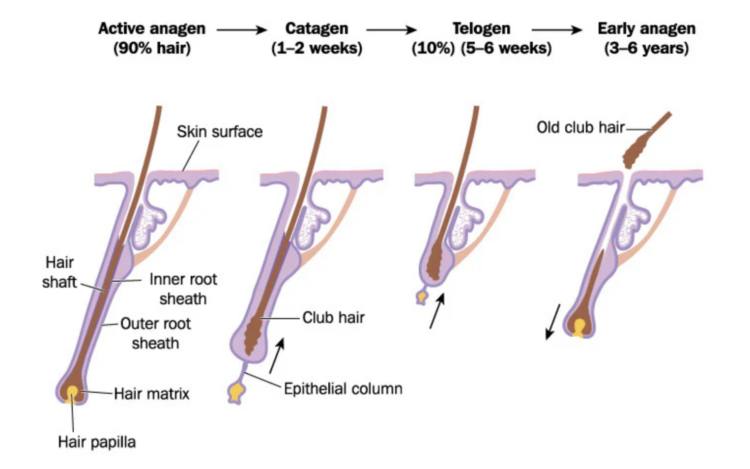
The hair on your head grows in a continuous cycle that consists of several phases. Here’s a breakdown of these phases, focusing on the telogen phase, where telogen effluvium takes its name:
- Anagen Phase: This is the growth phase, lasting about 2 to 7 years. Most of your scalp hair is in this phase. New anagen hair grows in this stage.
- Catagen Phase: A transition stage that lasts about 10 days. The hair follicle shrinks and detaches from the dermal papilla.
- Telogen Phase: The resting phase, lasting around 3 months, where the hair doesn’t grow but stays attached to the follicle. About 10-15% of our hair is in this phase at any time. TE occurs when a higher percentage of hairs enter this phase prematurely due to stressors.
- Exogen Phase: The shedding phase where old hair (club hair) is replaced by new hair. On average, people shed between 50 to 100 hairs daily.
Distinction from Other Hair Loss Types
Understanding the difference between telogen effluvium and other types of hair loss is important for proper management and treatment. Let’s compare TE to androgenetic alopecia (female pattern hair loss):
- Telogen Effluvium:
- Cause: Triggering event leading to more hairs entering the telogen phase.
- Nature: Temporary, hair can regrow once the cause is addressed.
- Pattern: Diffuse thinning over the scalp, particularly the crown.
- Androgenetic Alopecia:
- Cause: Genetic and hormonal influence, particularly dihydrotestosterone (DHT).
- Nature: Progressive and often requires medical treatment to manage.
- Pattern: Typically presents as receding hairlines and thinning on the top of the head, especially in men.
| Feature | Telogen Effluvium | Female Pattern Hair Loss |
|---|---|---|
| Onset | Often sudden | Gradual |
| Pattern | Diffuse shedding | Widening part/top thinning |
| Trigger | Stress, illness, hormones, nutrition, medication | Genetics/hormones |
| Follicles | Usually preserved | Gradual miniaturization |
| Recovery | Often reversible | Usually progressive without treatment |
Explore our article detailing the differences between TE and female pattern hair loss.
What Does Telogen Effluvium Look Like in Women?
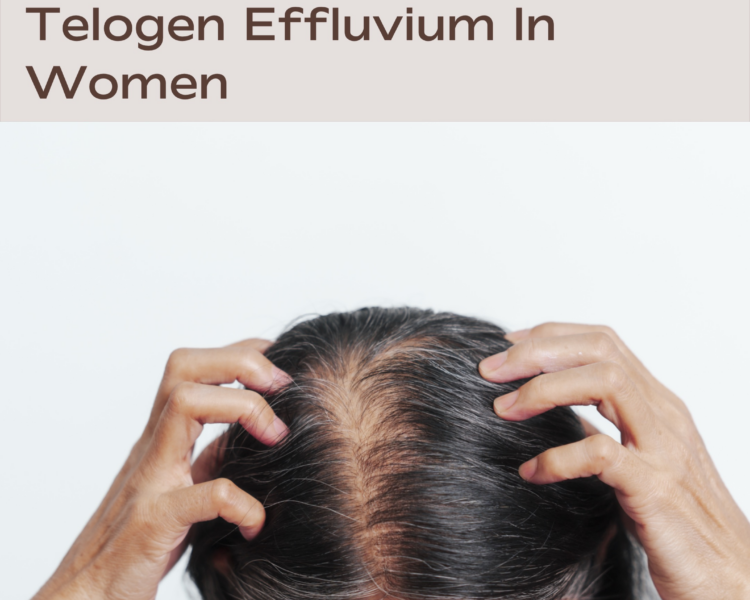
Telogen effluvium in women usually appears as diffuse shedding rather than a single bald patch. Many women first notice more hair in the shower, brush, pillow, or drain. The ponytail may feel thinner, the part may look wider, and overall volume may decrease, but the scalp often remains evenly covered. Unlike some permanent forms of hair loss, telogen effluvium usually does not destroy the hair follicle.
What Causes Telogen Effluvium in Women?
Telogen effluvium occurs when physical or emotional stressors push a large number of hair follicles into the resting (telogen) phase, leading to noticeable shedding. For women, several factors can contribute:
- Acute Stressors: Major surgery, severe trauma, severe infection, postpartum hormonal changes, or emotional shock.
- Hormonal Conditions: Menopause, pregnancy, or thyroid imbalances can disrupt the hair growth cycle. Learn more in our post on hormonal hair loss in women.
- Nutritional Deficiencies: Low protein intake or iron deficiency may weaken follicles and reduce growth support.
- Medication Adjustments: Some medications, like antidepressants or chemotherapy, can interfere with hair cycling.
- Crash Dieting or Rapid Weight Loss: Sudden changes in nutrition can impact hair.
“When the body shifts resources to healing or coping with stress, hair follicles can temporarily lose priority. This pause in growth is often reversible once balance is restored. The most powerful treatment for telogen effluvium is identifying and removing the trigger. Without that, everything else is just supportive care.”
Telogen Effluvium Symptoms in Women
How do you know if you’re experiencing telogen effluvium? The symptoms of telogen effluvium can be subtle at first but often become apparent:
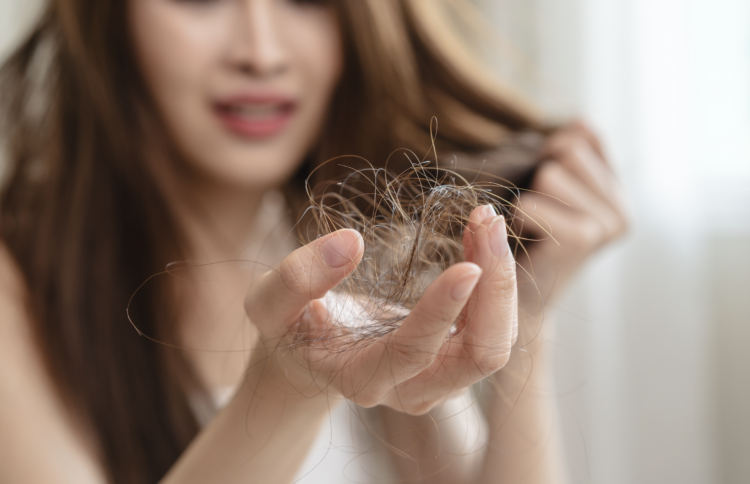
- Increased hair fall, especially during the acute shedding phase.
- Thinning hair, especially on the top of the scalp, without any clear bald patches.
- Fragile hair that may break easily during brushing.
- Gentle hair pull or gentle pull test results may reveal excessive shedding.
- Often follows stress, illness, surgery, postpartum changes, or rapid weight loss
- Diffuse thinning
If your hair loss appears to be traction-related, you may want to review our article on ponytail bald and traction alopecia.
Diagnosis
Diagnosing telogen effluvium involves understanding the story behind your hair loss. Here’s how doctors typically proceed:
- Physical Examination: A clinical review of your scalp and hair pattern.
- Hair Pull Test: A gentle tug on a small section of hair to assess shedding. Shape of the root and presence of free edge help confirm resting telogen hair.
- Blood Tests: To check for iron deficiency or other systemic issues.
- Trichogram or Phototrichogram: Used in recent studies or trials but not always necessary.
- Scalp Biopsy: Occasionally used to rule out diffuse alopecia areata or alopecia areata incognita.
Dr. Rogers explains, “While often not needed, objective tools like trichograms or videodermoscopy help us separate telogen effluvium from more permanent types of hair loss—and give patients real clarity.”
Treatment Options
Managing telogen effluvium begins with identifying and addressing the underlying cause:
- Lifestyle Adjustments: Reduce stress with mindfulness or yoga.
- Nutrition: Eat plenty of protein and address any iron deficiency.
- Supplements: Include biotin or formulas supported in recent trials.
- Medical Therapies: Topical minoxidil or oral minoxidil may help, particularly in chronic metabolic illnesses or prolonged TE.
- Avoid Hair Transplants: TE is usually reversible and doesn’t require invasive options.
If you suspect stress is contributing to your hair loss, explore our post on how stress causes hair loss and whether it will grow back.
Dr. Rogers notes, “Empathy and education are just as therapeutic as minoxidil. When patients understand what’s happening, the fear around shedding transforms into a sense of control.”
When to Seek Help
Consult a healthcare provider if your shedding lasts more than six months or becomes psychologically distressing. Cases of telogen effluvium in healthy patients typically resolve, but chronic cases may require further support.
What to Ask Your Provider About Sudden Hair Shedding
- Could this be telogen effluvium, female pattern hair loss, or both?
- Should I check ferritin, thyroid function, vitamin D, or other labs?
- Could a medication, diet change, illness, or hormonal shift be contributing?
- Do I need a scalp exam, hair pull test, trichoscopy, or biopsy?
- Would minoxidil or another treatment be appropriate for my situation?
- How long should I wait before reassessing my progress?
“Hair loss is often a mirror of internal stress, not a reflection of who they are or their health long-term.”
Dr. Kristen Rogers
How Long Does Telogen Effluvium Last? Recovery Signs in Women
Most cases of acute telogen effluvium improve once the trigger is corrected, but visible recovery takes time because hair grows slowly. Early recovery signs may include less shedding, fewer hairs in the shower or brush, short new hairs near the hairline or part, and gradual improvement in volume.
TE often leads to a good cosmetic outcome and good recovery of hair density once the trigger is resolved:
- 0–3 Months: Acute shedding continues.
- 3–6 Months: Anagen hair starts to grow.
- 6–12 Months: Hair thickens and returns to normal volume.
Localized hair loss around the temples could indicate other causes—learn more about temporal hair loss in women.
Conclusion
Telogen effluvium can feel alarming, especially when shedding starts suddenly, but it often follows a predictable and reversible course. With an active role in your health and guidance from a provider, you can expect hair recovery.
Frequently Asked Questions About Telogen Effluvium in Women
What does telogen effluvium look like in women?
Telogen effluvium in women usually appears as diffuse shedding rather than a single bald patch. Many women notice more hair in the shower, brush, pillow, or drain. The ponytail may feel thinner, the part may look wider, and overall volume may decrease, but the scalp often remains evenly covered.
What are the symptoms of telogen effluvium in females?
Common symptoms include sudden increased shedding, thinning hair across the scalp, more hair fall during brushing or washing, and a noticeable decrease in hair density. Some women may also see short regrowth hairs as recovery begins. Telogen effluvium typically does not cause smooth circular bald patches.
What causes telogen effluvium in women?
Telogen effluvium can be triggered by physical or emotional stressors that shift more hair follicles into the resting phase. Common causes in women include postpartum hormonal changes, illness, surgery, severe stress, thyroid imbalance, iron deficiency, rapid weight loss, crash dieting, medication changes, and other major changes in the body.
How long does telogen effluvium last?
Acute telogen effluvium often improves within three to six months once the underlying trigger is corrected. Visible recovery can take longer because hair grows slowly. Some women may need six to twelve months to notice fuller density and improved volume.
Does hair grow back after telogen effluvium?
In many cases, yes. Telogen effluvium usually does not permanently damage the hair follicle, so regrowth is often possible once the trigger is identified and addressed. Recovery depends on the cause, overall health, nutrition, hormones, and whether another form of hair loss is also present.
What are signs of recovery from telogen effluvium?
Signs of recovery may include less hair shedding, fewer hairs in the shower or brush, short new hairs near the hairline or part, and gradual improvement in volume. Recovery is usually gradual, so the first sign is often stabilization of shedding before visible thickening occurs.
Can telogen effluvium cause visible thinning?
Yes. Telogen effluvium can cause visible thinning, especially when shedding is significant or prolonged. The thinning is usually diffuse, meaning it affects the overall scalp rather than creating one isolated bald area. Some women notice a thinner ponytail, a wider-looking part, or reduced fullness around the crown and temples.
How is telogen effluvium different from female pattern hair loss?
Telogen effluvium is usually triggered by a stressor and causes sudden diffuse shedding. Female pattern hair loss is typically more gradual and is often related to genetic and hormonal influences. Telogen effluvium is often temporary, while female pattern hair loss may progress over time without treatment. Some women can have both conditions at the same time.
When should I see a doctor for telogen effluvium?
You should consider medical evaluation if shedding lasts more than six months, becomes severe, causes emotional distress, or is associated with symptoms such as fatigue, irregular periods, scalp pain, itching, patchy hair loss, or signs of thyroid or iron deficiency. A provider can help determine whether telogen effluvium or another hair loss condition is present.
Is telogen effluvium permanent?
Telogen effluvium is usually temporary. Because the follicles are generally preserved, hair can often regrow after the underlying trigger is resolved. However, chronic shedding or overlapping conditions, such as female pattern hair loss, may require a more detailed treatment plan.