

Hair loss is incredibly distressing. Despite its high prevalence in society, it often leads to psychological distress. Commonly, individuals may feel embarrassment, self-consciousness and frustration.[1]
Adding insult to injury, many worry as to whether their hair loss is normal. Asked another way, is the hair loss a sign of something more serious?
Categories of Hair Loss
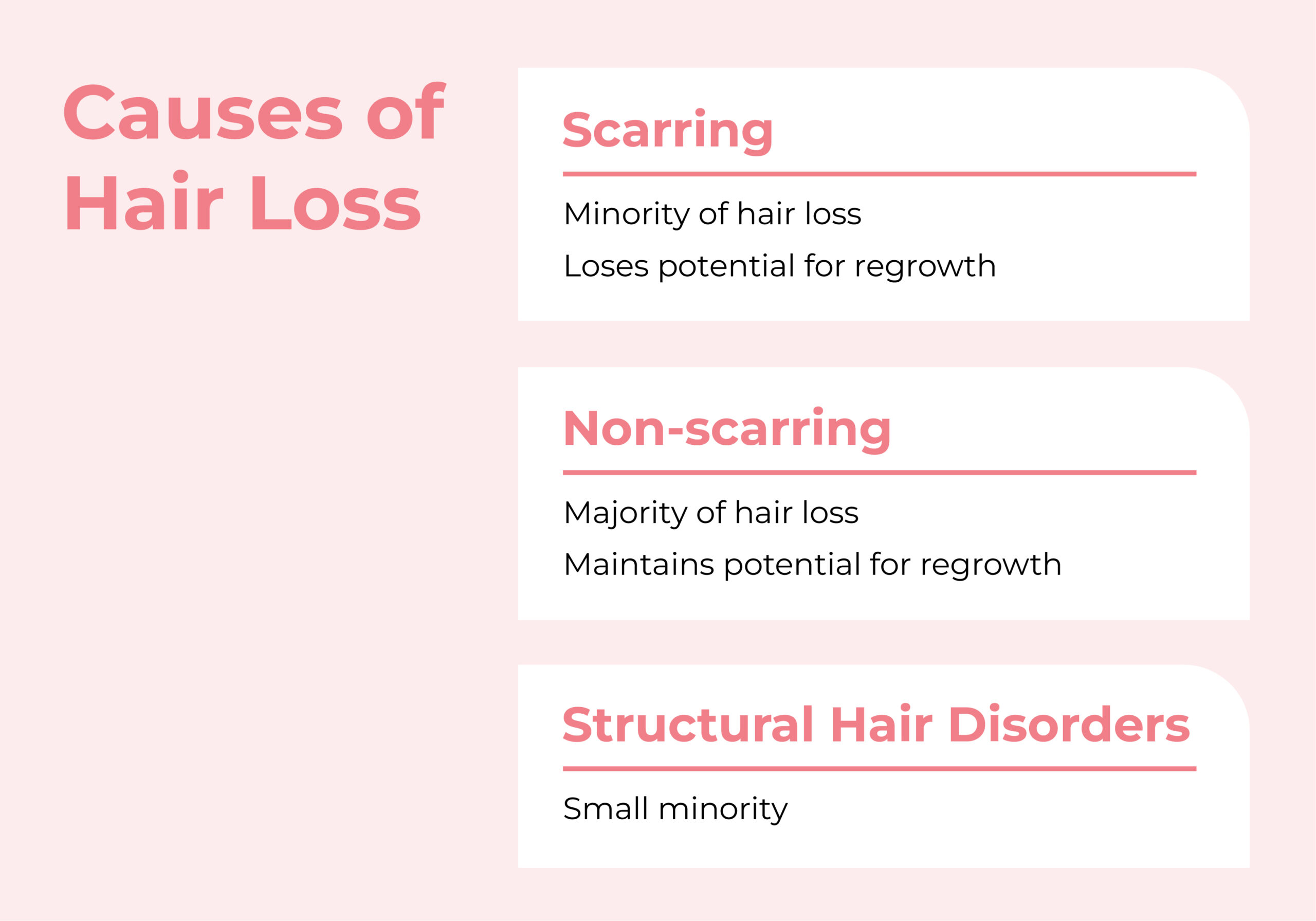
Hair loss comes in two major categories of alopecia (hair loss): cicatricial (scarring) and non-cicatricial (non-scarring).[2] Scarring alopecias are inflammatory disorders of the scalp that lead to permanent hair loss. Non-scarring alopecias maintain their potential for hair regrowth.[3]
A 2019 study evaluated 3000 individuals and found that nearly 25% of the individuals reporting alopecia had a scarring alopecia.[4] It is important to diagnose scarring alopecias early as they can lead to permanent hair loss.[2] Potential tip-offs for scarring alopecia include possible loss of eyebrows, patchy hair loss with evidence of scarring, and itching, redness or papules related to the hair loss. A medical workup often will involve a small biopsy of the affected scalp.
Non-scarring alopecias are the predominant category of alopecia.[2] Within the non-scarring alopecias the most common are benign. Androgenetic Alopecia is the typical patterned hair loss we see in both men women alike. Recent studies suggest androgenetic alopecia makes up about 75% of all hair loss. Yet there are causes of hair loss that may have systemic manifestation and require further investigation.[5]
Systemic Causes of Hair Loss
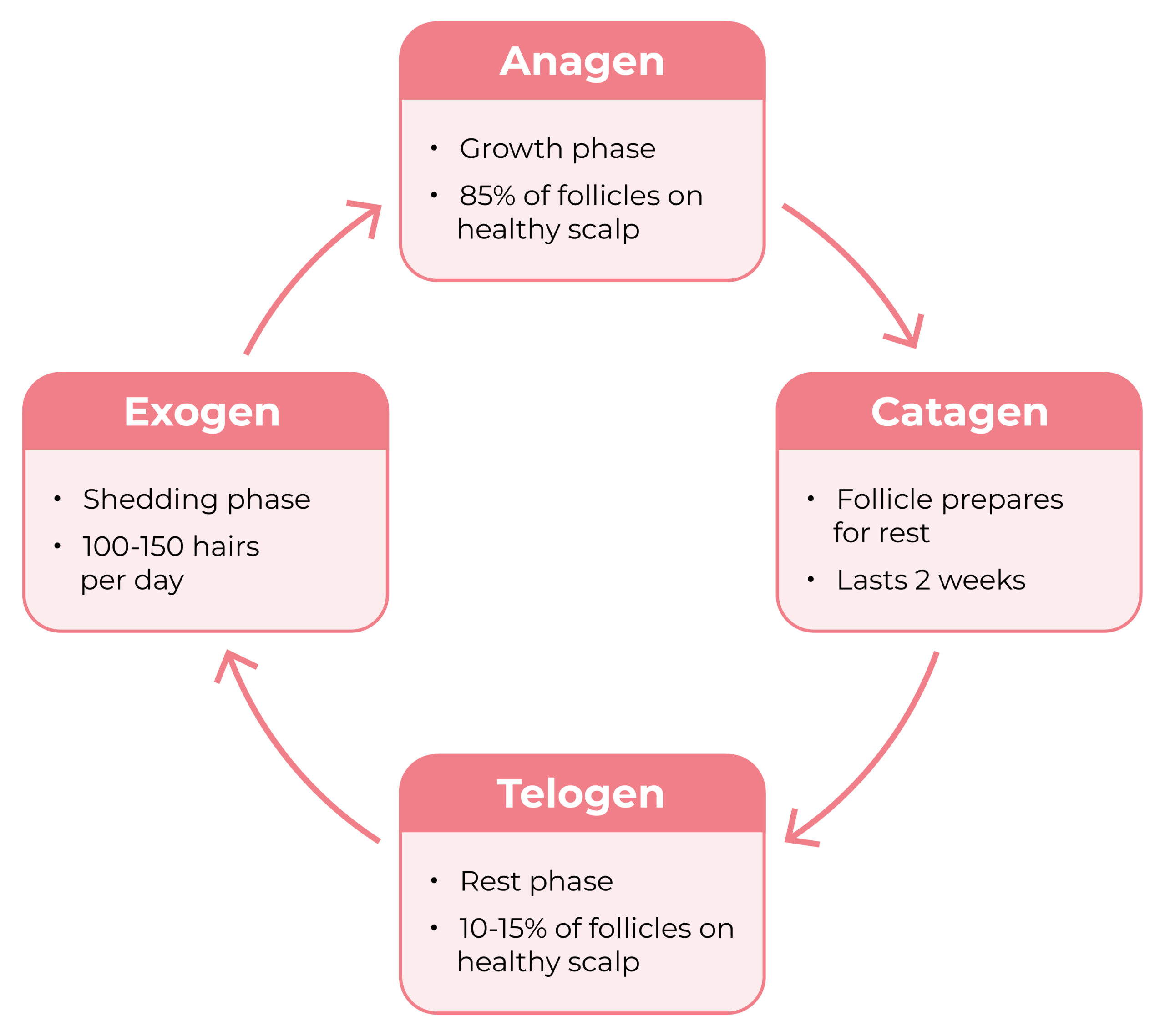
Telogen effluvium is a form of nonscarring alopecia that is characterized by diffuse and often sudden shedding.[6] A normal healthy person has about 15% of hairs in telogen. A stress to the body can cause 70% of anagen hairs to switch to telogen.[6] Possible causes include severe fever, postpartum period, iron deficiency, oral contraception, crash dieting, surgery and infection.[5]
Nutritional Issues
Nutritional issues may also lead to hair loss via systemic causes. Generally, this will also be through telogen effluvium but can also be through other mechanisms.[5] Nutrition is vital to proper hair physiology. Disruption of nutritional building blocks may lead to accelerated hair loss or decreased growing capacity. Previously reported nutritional etiologies include selenium excess, iron deficiency, zinc deficiency, vitamin b12 excess or deficiency and protein deficiencies.[5] These vitamins are vital for many other physiologic duties in our body, in this sense hair loss may be a sign of possible issues elsewhere in the body.
Hormonal Imbalances
Hormonal imbalances can also lead to accelerated hair loss.[5] Alterations in the sex hormone pathways, stress (cortisol) pathways and thyroid pathways can lead to hair loss. Hair loss findings will be in the form of a nonscarring alopecia of undetermined etiology. Subsequent lab tests will often reveal diagnosis and the alopecia often improves with therapy of underlying diagnosis.
Infections
Infections are another preventable cause of hair loss. The most commonly reported are infections related to fungal infections and less commonly, syphilis. Syphilitic alopecia is often described as “moth-eaten alopecia” given its appearance. Treatment is simple and may prevent permanent hair loss. Fungal infection hair loss is often associated with itching and redness. This is an inflammatory hair loss that can be prevented with early recognition and treatment.[5]
Systemic Illnesses
Many systemic illnesses lead to hair loss through mechanisms related to chronic inflammation. These include malignancies, liver disease, kidney disease, and various rheumatologic disorders such as lupus.[5] The findings of hair loss will often be accompanied by unusual fatigue, weight loss, night sweats or other general symptoms. Investigation by a primary care physician will often reveal the etiology through relevant lab tests.
While not systemic by definition, trichotillomania has behavioral implications. The hair-pulling disorder occurs in approximately 0.5 to 2% of the population. It is listed as an obsessive compulsive disorder in the diagnostic and statistical manual of mental disorders-5. There have been a variety of therapies researched ranging from pharmacotherapy to psychotherapy with varying degrees of success. Early diagnosis and intervention is crucial for both hair loss and behavioral implications.[7]
Signs and Symptoms Indicating Possible Systemic Cause
Systemic causes come with a broad array of possibilities. Signs suggesting a process other than normal androgenetic hair loss which are undiagnosed should get further workup. Here are some possible signs of systemic hair loss.
In Conclusion
Hair loss commonly occurs secondary to androgenetic causes, commonly known as male and female pattern balding. Infrequently hair loss can be a sign of something occurring elsewhere in one’s body. These systemic causes of hair loss are often reversible when caught early. Further, the hair loss itself may have potential to lead to early diagnosis of the systemic cause. If there is concern for systemic causes of hair loss individuals should arrange an appointment with their primary care provider as soon as possible for further investigation.
Sources
- Dhami L. Psychology of Hair Loss and Importance of Counseling. Indian J Plast Surg. 2021. 54(4): 411-415.
- Phillips G. Hair Loss: Common Causes and Treatment. American Family Physician. 2017. 96(6):371-378.
- Lin J et al. Feature Characterization of Scarring and Non Scarring Types of Alopecia by Multiphoton Microscopy. Lasers Surg Med. 2019. 51(1):95-103.
- Vano Galvan S et al. Frequency of the Types of Alopecia At Twenty-Two Specialist Hair Clinics: A Multicenter Study. Skin Appendage Disord. 2019. 5(5):309-315.
- Lin R et al. Systemic Causes of Hair Loss. Annals of Medicine. 2016. 6(48):393-402.
- Hughes E et al. Telogen Effluvium. Stat Pearls. 2023.
- Grant J. Trichotillomania. Indian J Psychiatry. 2019. 61(Suppl 1):S136-S139.