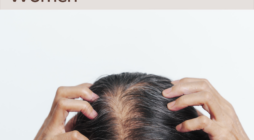



How to Tell the Difference—and Why It Matters
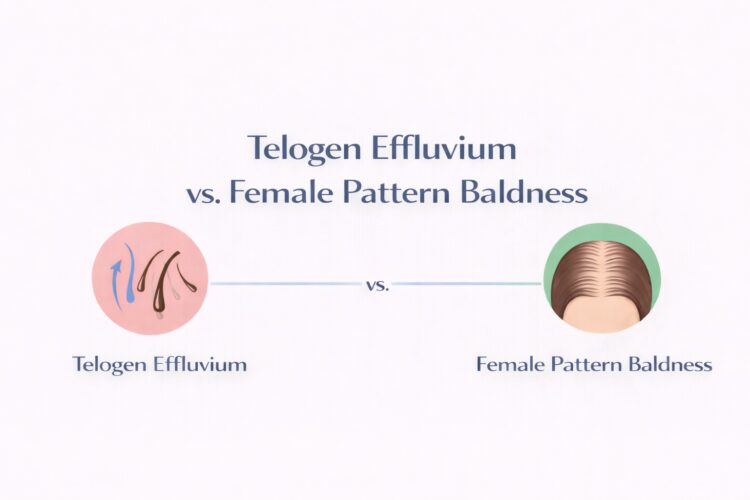
Key Highlights
- Telogen effluvium (TE) is a temporary condition that causes diffuse hair fall, often following physical stress, illness, childbirth, or hormonal shifts, as described in telogen effluvium in women.
- Female pattern hair loss (FPHL)—also known as androgenetic alopecia—is a gradual, genetically driven type of hair loss that progresses over time, consistent with the long-recognized patterns outlined in female pattern hair loss: a tale as old as time .
- TE primarily affects the telogen phase of the hair cycle, while FPHL shortens the growth phase, leading to thinning.
- Many women experience overlap, particularly during postpartum periods, when shedding timelines such as those discussed in when postpartum hair loss stops become clinically relevant.
- Accurate evaluation by a qualified healthcare provider improves outcomes and helps avoid unnecessary or ineffective treatments.
Introduction
Hair loss can be emotionally distressing, especially when it appears suddenly or progresses without a clear explanation. While shedding some hair daily is normal, noticeable hair loss often signals an underlying disruption in the hair cycle. This distinction between normal shedding and pathologic loss is explored in understanding hair shedding and hair loss .
Two of the most common causes of female hair thinning are telogen effluvium and female pattern hair loss. Although both affect scalp hair and may coexist, they arise from distinct biological mechanisms and require different management strategies. Placing these conditions within the broader spectrum of causes of hair loss in women helps clarify why accurate diagnosis matters .
This guide explains the key clinical differences between telogen effluvium and female pattern hair loss in a clear, patient-centered way.
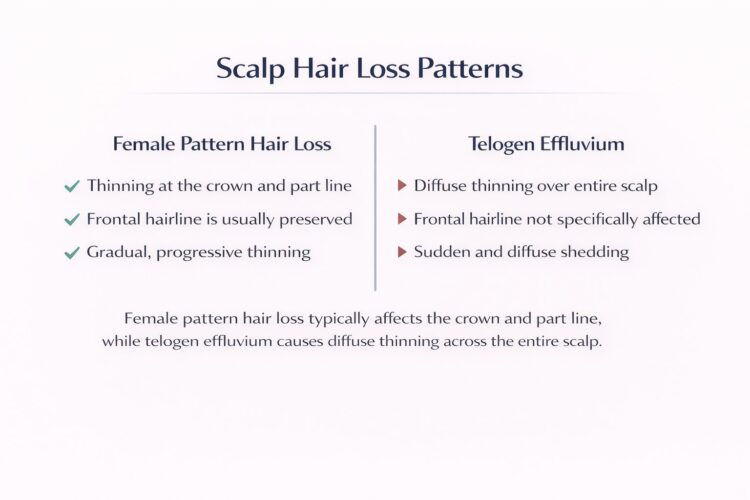
Quick Clinical Clues
More Suggestive of Telogen Effluvium
- Sudden increase in the number of hairs shed daily
- Rapid hair loss beginning 2–3 months after illness, surgery, emotional stress, or childbirth
- Diffuse thinning across the entire scalp
- Often described as temporary hair loss, even when the volume of shedding feels alarming—similar to concerns addressed in why am I shedding so much hair and how much is too much
More Suggestive of Female Pattern Hair Loss
- Gradual thinning at the crown or widening of the central part
- Strong family history of hair thinning
- Progressive loss of density rather than excessive shedding
Overlap: Telogen effluvium can unmask underlying androgenetic alopecia, especially during hormonal transitions such as postpartum or perimenopause.
When Hair Loss Deserves Evaluation
Hair loss warrants professional evaluation when shedding persists beyond expected timelines, thinning continues to progress, or symptoms extend beyond the scalp. In some cases, hair loss can reflect systemic concerns similar to those discussed in can hair loss be a sign of something serious.
You should consider evaluation if:
- Shedding lasts longer than 8–12 weeks
- Thinning is progressive (widening part or crown thinning)
- Scalp symptoms such as burning, itching, or pain are present
- Hair loss does not improve after the original trigger resolves
- Additional symptoms suggest an underlying medical contributor
Tip: Bringing a timeline of stressors, illnesses, medications, and consistent photos of the scalp can significantly aid clinical assessment.
Onset and Timeline
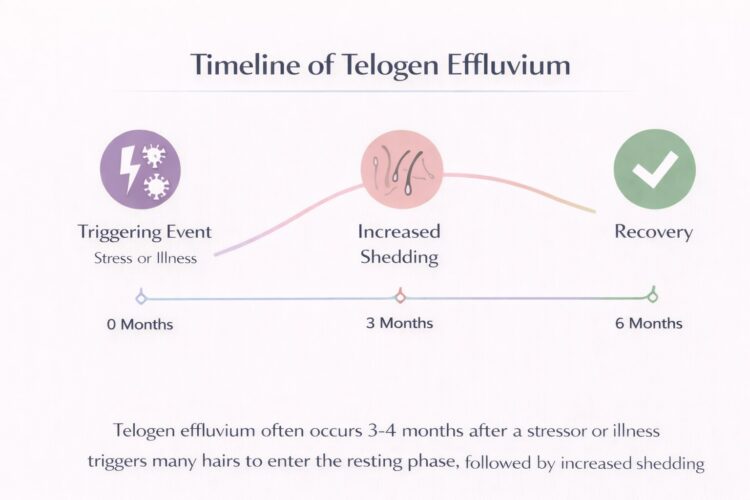
Telogen effluvium typically begins abruptly. A triggering event causes a large number of hair follicles to shift prematurely into the telogen phase, the resting stage of the hair cycle. Because hair remains in this phase for several weeks before shedding, many women notice hair fall months after the original stressor.
If excessive shedding persists beyond six months, the condition may be classified as chronic telogen effluvium, often associated with ongoing stress, nutritional deficiencies, or untreated medical issues.
Female pattern hair loss develops slowly and progressively, often over many years. It represents the female counterpart to male pattern baldness, though women typically experience diffuse thinning rather than receding hairlines.
Shedding vs. Thinning: What’s Happening Biologically
In telogen effluvium, hair follicles prematurely exit the growth phase and enter the resting phase in large numbers. This leads to synchronized shedding of telogen hairs, sometimes resulting in hundreds of hairs lost per day. Importantly, the follicles remain healthy and capable of producing new hair once the cycle normalizes.
In female pattern hair loss, follicles undergo gradual miniaturization. With each hair cycle, the amount of hair produced becomes finer and shorter, leading to visible thinning and reduced scalp coverage rather than dramatic shedding.
Pattern and Location of Hair Loss
- Telogen effluvium: Diffuse thinning across the entire scalp, including the sides and back. Many women notice a thinner ponytail or increased scalp visibility.
- Female pattern hair loss: Thinning primarily affects the crown and central part line, often forming a “Christmas tree” pattern, while the frontal hairline is usually preserved.
Unlike autoimmune conditions such as alopecia areata, neither condition typically causes sharply defined bald patches.
Are the Associated Symptoms Different?
Active telogen effluvium may be accompanied by scalp tenderness, sensitivity, itching, or a burning sensation. These symptoms often reflect active shedding. Female pattern hair loss generally does not cause scalp discomfort but may be associated with hormonal changes, particularly during perimenopause, menopause, or conditions such as polycystic ovary syndrome.
Triggers and Contributing Factors
Common triggers of telogen effluvium include:
- Severe illness, high fever, or surgery
- Postpartum hair loss following childbirth
- Nutritional deficiencies such as iron, vitamin D, or B12
- Emotional stress and mental health strain
- Rapid weight loss or restrictive dieting
Maintaining a balanced diet, correcting deficiencies, and managing stress are critical to restoring healthy hair growth.
Female pattern hair loss, in contrast, is driven by genetics and follicular sensitivity to hormones rather than elevated hormone levels themselves.
Hair Growth Cycle Differences
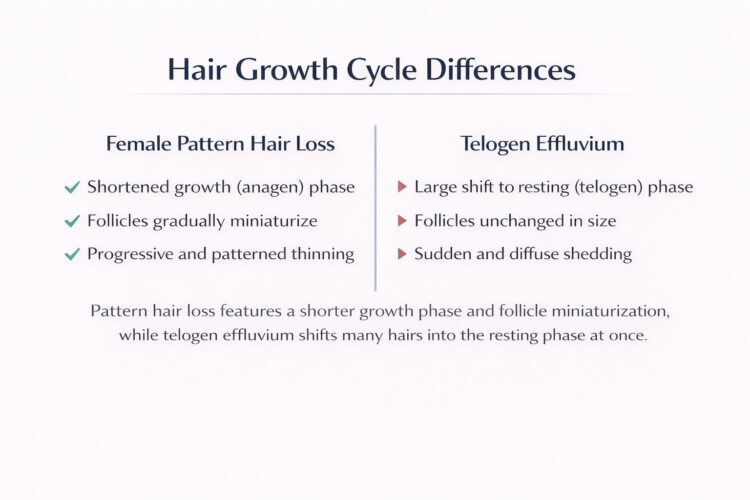
The hair growth cycle includes:
- Anagen (growth)
- Catagen (transition)
- Telogen (resting)
Telogen effluvium disrupts this balance by prematurely shifting too many hairs into the telogen phase. Female pattern hair loss shortens the anagen phase over time, reducing hair length and thickness.
By contrast, anagen effluvium—such as that caused by chemotherapy—involves sudden hair loss during the growth phase and represents a separate medical entity.
Who Is Affected?
Telogen effluvium can affect women of any age and is one of the most common types of hair loss seen in clinical practice. Female pattern hair loss becomes more prevalent with age and is strongly influenced by inherited risk factors.
Diagnosis and Evaluation
Accurate diagnosis involves a thorough medical history, careful review of medications and stressors, and laboratory testing when appropriate. A detailed scalp examination, often using dermoscopy, helps differentiate diffuse shedding from follicular miniaturization.
In some cases, hair loss reflects underlying health conditions that require broader medical evaluation.
Prognosis and Regrowth
Telogen effluvium is usually reversible. Once the trigger is corrected, shedding slows and new hair growth typically begins within several months.
Female pattern hair loss is chronic and progressive. While full reversal is uncommon, early intervention can significantly slow progression and help preserve hair density.
Treatment Approaches
Treatment depends on the underlying diagnosis:
- Telogen effluvium: Identifying and correcting triggers, nutritional optimization, and reassurance
- Female pattern hair loss: Topical therapies, medical management, lifestyle adjustments, and in selected cases, procedures such as hair transplant
Not all hair loss treatments are appropriate for every patient. Potential side effects and individualized risks should always be reviewed with a qualified healthcare provider.
Conclusion
Telogen effluvium and female pattern hair loss are distinct yet commonly overlapping forms of hair loss. One is typically a temporary condition, while the other reflects a long-term, genetically driven process. Understanding the difference empowers women to pursue targeted care, avoid unnecessary treatments, and protect long-term hair health.
References
Herskovitz I, Tosti A. Female pattern hair loss. International Journal of Endocrinology and Metabolism.2013;11(4):e9860. doi:10.5812/ijem.9860. PMID: 24719635; PMCID: PMC3968982.
Rebora A. Telogen effluvium: a comprehensive review. Clinical, Cosmetic and Investigational Dermatology.2019;12:583–590. doi:10.2147/CCID.S200471. PMID: 31686886; PMCID: PMC6709511.
Karakoyun Ö, Ayhan E, Yıldız İ. Retrospective review of 2,851 female patients with telogen effluvium: a single-center experience. Journal of Cosmetic Dermatology. 2025;24(2):e70037. doi:10.1111/jocd.70037. PMID: 39950230; PMCID: PMC11826290.
Medical Disclaimer: This content is for educational purposes only and does not replace personalized medical evaluation, diagnosis, or treatment.