

The Reality of Women’s Hair Loss
The most common cause of alopecia in women is Female Pattern Hair Loss (FPHL), affecting more than half of all women within their lifetime. The significance of FPHL on an individual’s well-being has been frequently reported yet continues to be underappreciated by clinical practitioners and society at large.
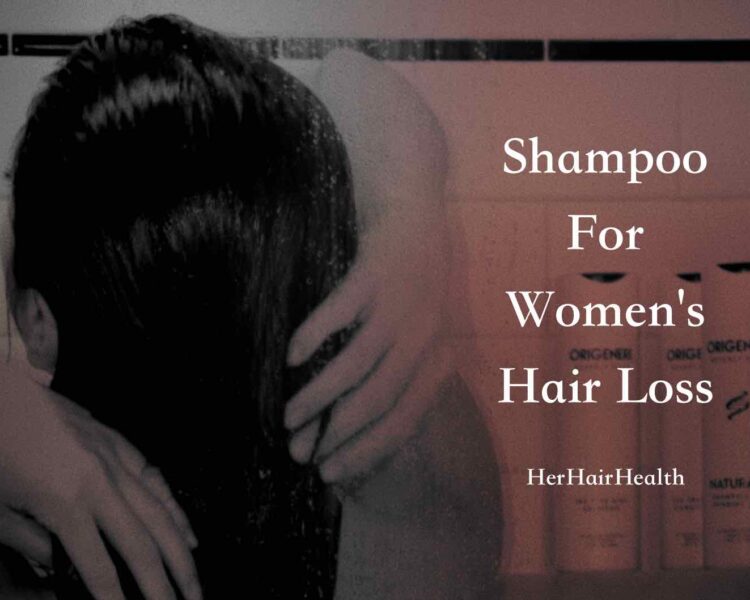
While FPHL is predominantly genetically determined, environmental factors play a very large role in hair loss in general. It is critical to develop a maintenance program which supports and nourishes your scalp and strands. The backbone of any good maintenance program is shampoo. You may be wondering which is the best shampoo to treat women’s hair loss or if these shampoos for women even exist. Let’s explore all of the options, starting from the beginning.
What is Shampoo?
In its basic form, shampoo is a product, that is meant to serve as a cleanser to the dome and locks. It generally comes in fluid form but is available in other forms such as a shampoo bar as well.
In the 1500s, English stylists boiled shaved soap in water and added herbs to bring shine and fragrance for their clients. Fast forward to 1908 when The New York Times published “simple rules” on how to shampoo, priming the market for the first commercial shampoo in 1914 by Kasey Herbert. Today, the global market is $32.5 billion dollars.
The concept of shampoo is a simple one – remove the excess oils, product buildup, pollutants and dirt on the head for hygiene reasons and for purposes of optimizing locks and scalp. These factors, if left unattended, can lead to inflammation. Inflammation, in turn, leads to poor hair health.
The challenge is to remove just enough of the natural occurring oils for the strands to appear clean, while leaving behind enough to leave them soft, shiny and manageable. This is the balance the shampoo industry has been attempting to optimize since the first mass produced shampoo, Drene, was released in the 1930s.
What is the Difference Between Regular Shampoo and Ladies Shampoo for Thinning Hair?
Shampoo cleans. But not all shampoos are the same. Some are regular, and some are made for people with thinning hair. How are they different?
Regular shampoo is for general use. It removes dirt and oil. It keeps your mane clean and fresh. It doesn’t do much more than that… and depending on the ingredients sometimes does more damage than good.
Ladies shampoos for thinning hair are special. They do more than clean. They help make those fibers look and feel thicker. These shampoos have special ingredients that may help women with thin hair achieve enhanced hair density.
Why Use A Special Shampoo For Hair Thinning?
It can help. It might not fix the problem completely, but it can improve how your hair looks and feels. These shampoos work on different mechanisms. For individuals with brittle hair they may provide ingredients like hyaluronic acid to strengthen the hair shaft. Or the emphasis may be in developing fuller hair for those with androgenetic alopecia leveraging ingredients like Rosemary.
The Three Principles of Choosing The Best Shampoo For Women with Thinning Hair
Typical ingredients in popular shampoos include:
- Detergents for cleansing effect
- Conditioners for softening and moisture
- Thickeners
- Fragrances
- Special additives
- Preservatives
- Sequestering agents
- Opacifiers
It is not as important to know what each does than to realize as we talk about the best hair loss shampoo for women, we are far away from our mixtures of botanicals in the 1500s.
So within this multibillion dollar industry, how do you cut through the noise and find something that works for women with thinning hair? Follow these three principles:
- First, do no harm: What ingredients to avoid.
- Keep the main thing the main thing: How are we cleansing?
- Fill in the gaps: What do we need to nourish your specific hair to achieve your specific goals?
Ingredients To Avoid In Shampoos For Thinning Hair For Women
The first commercial shampoo with a synthetic cleansing agent, Drene, was originally used to clean cars and do laundry. The industry quickly realized that more cleansing isn’t necessarily better cleansing. While there are benefits to maintaining a “clean” scalp, doing nothing is arguably better than overdoing as it applies to scalp health.
The industry began a testing period, evaluating different synthetic ingredients to reach the “perfect clean.” Now with years of experience, we have found certain categories of ingredients which have proven to best be avoided.
Ingredient | Purpose | Why You Shouldn’t Use It
- Sulfates: Sodium lauryl sulfate, sodium laureth sulfate | Shampoo (Lather) | Can damage scalp, and alter texture of hair. Possible carcinogen
- Parabens | Preservative | Possible carcinogen, suspected hormonal disruption
- Silicones | Preservative | Possible carcinogen and suspected hormonal disruption. Dries out the hair and can flatten curls
- Mineral oil | Moisturizer | Dries out hair
- Phthalates | Preservative | Suspected hormone disruption and possible carcinogen. Possible cardiovascular side effects
- Alcohols | Drying agent | Dries out hair and scalp
- Added Fragrances | Scent | Usually derived from hazardous petrochemicals
- Polyethylene glycols | Thickening agent | Research on toxicity is inconclusive, looking for link to scalp irritation
- Triclosan | Antibacterial agent | Hormone disruptor (Banned)
- Retinyl Palmitate | Boosts collagen production | Skin irritation
- Benzene | Dye solvent | Toxic in high doses and possible carcinogen. May lead to certain birth defects.
- Selenium Sulfide | Anti-infective | Known skin irritant. May cause permanent hair loss.
How The Best Shampoos For Women’s Hair Loss Clean The Scalp
Our current practices of daily hair washing, particularly in combination with aggressive cleansers, serves societal and marketing pressures to act a certain way rather than actually addressing healthy hair needs. For females with thin hair:
- Use gentle shampoos with mild cleansers that do not include ingredients to avoid.
- Look for shampoos with sulfate free surfactants. Botanical cleansers such as hop extract, tea tree extract, rosemary and sage are ideal.
As long as the cleanser is mild, the frequency of washing is based on your comfort level. Without a mild cleanser you could be doing a disservice to your scalp with daily washes. In fact, in the past decade the “No Poo” movement has developed to counter the harsh ingredients in popular shampoos.
The “No Poo Movement”
“No Poo” believers skip shampooing all together. This allows for the scalp’s natural oils to develop and balance the scalp’s microenvironment. Benefits include breaking the cycle of shampooing causing drying and then conditioning to moisturize then shampooing to remove the conditioner and other product buildup and then…. You see where this is going.
While “No Poo” is an intriguing concept we feel it is difficult to implement in modern day living. As such we recommend shampoos with mild detergents that avoid harsh ingredients caustic to your locks and scalp.
How Do Hair Loss Shampoos For Women Work?
The best shampoos for women’s hair loss typically contain ingredients like Rosemary, Saw Palmetto, and Sage which promote new growth, strengthen follicles, and reduce miniaturization. They also help improve scalp health by nourishing the follicle roots and stimulating blood flow for new hair growth.
Ingredients That Nourish to Achieve Your Goals
We’ve cleaned our strands and made sure we’re not exposing ourselves to harmful ingredients, now what? The field of follicular growth and health is rapidly growing, yet there are no approved strengthening shampoos for those specific purposes. With that said, there are a plethora of scientific studies demonstrating different levels of efficacy of phytonutrients as it applies to alopecia and strand health.
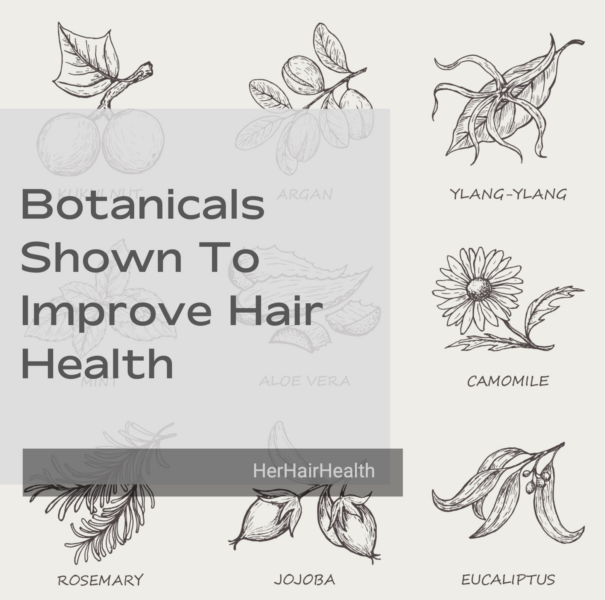
Key Ingredients In The Best Hair Loss Shampoos for Women
Our top picks for ingredients supporting healthy hair and new growth.
Ingredient | Possible Action
- Sunflower oil | Can prevent breakage, improve scalp hydration, and stimulate growth
- Organic jojoba | Can improve strand hydration, prevent dandruff, and stimulate growth
- Grape seed oil | Can promote growth, prevent hair loss, and improve scalp health
- Rosemary oil extract | Can increase strand diameter and density
- Peppermint oil | May increase the number of hair follicles. May increase growth activity and density
- Tea tree oil | May increase growth, may improve dandruff
- Saw palmetto | Effective in improving growth
- Neem oil | Promising natural treatment for hair loss
- Nettle extract | Promote growth and prevent thinning
- Ashwagandha | Minimize breakage, slow loss
- Turmeric | Anti-inflammatory and anti-microbial. Possible growth
- Bhringraj | Possible growth
- Brahmi | Possible growth
- Amla extract | Possible growth
- Moringa | Possible growth
- Rice Water I Possible growth and texture enhancer
- Coconut Oil I Reduces hair shaft breakage
- Argan Oil I Soothes scalp irritation, reduces breakage
- Amino Acids I Possible hair growth
- Pea Peptides I Possible growth
- Pumpkin Seed Extract I Possible growth
- Horsetail Extract I Possible growth
Consumers should take care to pick manufacturers for there ladies shampoo for thinning hair that appear well-researched and botanical based. Research the suggested ingredients to confirm scientific evidence to support the stated purpose before using a product. A bit of upfront work will go a long way in helping you find the best treatment to meet your goals. Be it rejuvenating fine hair with hair regrowth or optimizing your natural hair feel and look, options are plentiful.
Even The Best Shampoos For Women’s Hair Loss Can Be Made Better
Optimizing your shampoo for thinning hair is very important. The best part – the opportunity for hair and scalp enhancements do not stop there. Here are some common hair growth products to supplement your new shampoo regimen.
Make It A Shampoo and Conditioner Set
Even the most gentle shampoo may dry the scalp and strands. Conditioners enhance moisture and make hair more manageable. Adding the right conditioner to your routine is critical to optimizing those strands.
Hair Growth Vitamins
Vitamins for hair growth go a long way in supporting healthy locks. While nutritional deficiencies that lead to alopecia are rare in developed countries, a number of nutrients and botanicals are available to facilitate your growth.
Scalp and Hair Tonic
Give that scalp an extra boost with nutrient rich tonics for the scalp and strands. These tonics absorb efficiently and quickly, getting those much needed benefits directly to the follicle. Tonics also come in specialized forms as solutions for dry scalp and sensitive scalp with ingredients like aloe vera and castor oil.
Solutions Specifically Designed For Your Hair Type
Fine hair, curly hair, dry hair… Some hair types requires specific needs. Look for products that address these issues specifically. Be careful to review the ingredients and do research yourself.
Natural Hair Color Enhancers
A number of specialty products have come to the market recently which leverage botanicals to achieve natural hair color enhancement.
In Conclusion
Shampooing became more of a common occurrence in the 1900s after the invention of the first synthetic surfactant. Since then, the industry has continued to grow while testing various ingredients in the search for the best product and largest market share. During this process many detrimental ingredients have been introduced into the market.
Individuals should take care to follow the three principles of picking a shampoo.
First, do no harm. Pick a shampoo that will not create a larger problem than it is fixing.
Second, keep the main thing the main thing. How are we cleaning? Pick a shampoo that has a mild, preferably natural detergent.
Last, nourish to help grow. While no natural ingredients have been FDA-approved for use in growth, many have demonstrated efficacy in scientific studies. Find companies that appear well researched in their approach. Research the ingredients that are being utilized to confirm the scientific evidence.
Remember, shampoo is only part of the equation. Leverage other products for a complete holistic approach to your hair health routine.
Sources
D’Souza P et al. Shampoo and Conditioners: What a Dermatologist Should Know? Indian J Dermatol. 2015;60(3):248-254.
Jabeen Bhat, Y et al. Female Pattern Hair Loss – An Update. 2020; 11(4):493-501.
Schmitt J et al. Hair Loss perception and symptoms of depression in female outpatients attending a general dermatology clinic.
Thompson C. et al. Shampoo Science: A review of the physiochemical process behind the function of a shampoo. 2022;224(3).
21 scientifically studied ingredients for hair care to promote hair growth. OhHeymamahair.com