


The Impact of Hair Loss
Hair is an important part of one’s self-identity. We like to express ourselves and hair is the perfect tool to make a statement. You can style it, shave it, cut it, and bundle it. No other body part allows for as much agility related to expression.
How someone feels about their hair may influence their thoughts, feelings, perceptions and actions related to one’s physical look. As a result, hair loss can have profound psychological disturbances. Commonly, those afflicted will feel self-consciousness, embarrassment, frustration and jealousy.
Loss of hair at an early age is a signal of fleeting youth. Individuals find themselves feeling physically and socially less attractive, less virile and less likable. Findings support a worsening of these symptoms with a worsening of hair loss.
This stress is felt more in women than men. To women, hair serves as a sign of femininity and attractiveness. Indications of hair loss can be traumatic to a woman’s self-esteem and identity. Further, reduced cosmetic acceptance of baldness increases the societal pressure on women to have full, healthy hair. In some women symptoms may become so severe as to limit activities of routine living. Studies have demonstrated a significant association between a woman’s perception of hair loss and psychological well-being.
Despite these findings commercially available solutions have been predominantly male targeted. The International Society of Hair Restoration Surgery (ISHRS) reported over 703,183 hair restoration procedures globally in 2021, only 12.7% of surgical cases and 37.5% of non-surgical cases were in women. Hence, despite the associations between hair health and well-being, access to available solutions to women has been significantly limited secondary to a lack of market education.
A population-based study by Dr. Leonard Knoedler et al in 2023 found that women in the United States were less likely to have considered a hair transplant as a potential solution for their hair loss. When exposed to the option, they were willing to pay more for the hair transplant than their male counterparts.
Can I Afford a Hair Transplant?
A 2021 study based on 90 worldwide hair transplant clinics reported that the total cost of hair transplant in the US amounts to approximately $13,610. Depending on practitioner skill and services implemented, the range of costs range from $4,000 to upwards of $75,000, with the majority landing between $6K-$24K.
The broadness of this range, while initially intimidating, is a testament to how far the hair transplant industry has come in the last two decades. The range serves as an indication of increased optionality and improved access as it comes to hair transplantation.
The expansion of the bottom end of the range is of particular significance, ultimately opening up access to solutions to a larger chunk of the socioeconomic spectrum. Turkey specifically has been a huge boost to the industry. While not for everyone, Turkey’s efficient assembly line methodology allows for reduction in overall costs. This means individuals who previously could only consider medication management and supplement optimization now have further solutions to natural hair available to them.
What Should I Look for In A Hair Transplant Clinic?
At the end of the day, the biggest factor affecting pricing is the market. Practitioners and clinics who have less availability ultimately have higher prices. Within that paradigm, there are certain features that add to costs of procedures.
Type of Procedure: FUE vs FUT/FUSS
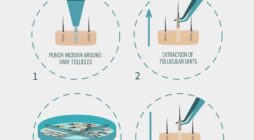
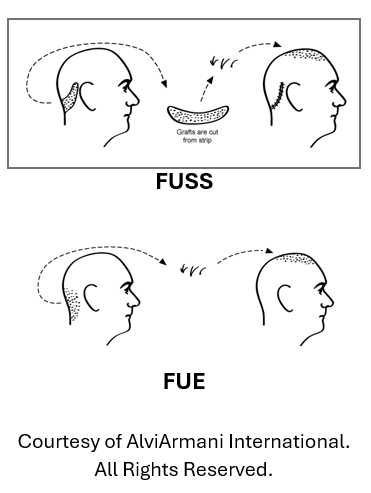
There are two methodologies for hair transplantation used in modern day. Both of these deal with the harvesting phase of the procedure. During the harvesting phase of the procedure hair follicles are taken from the back or side of the patient’s head or the donor region. The follicles are subsequently prepped, treated and reimplanted in the recipient region for future growth.
FUSS
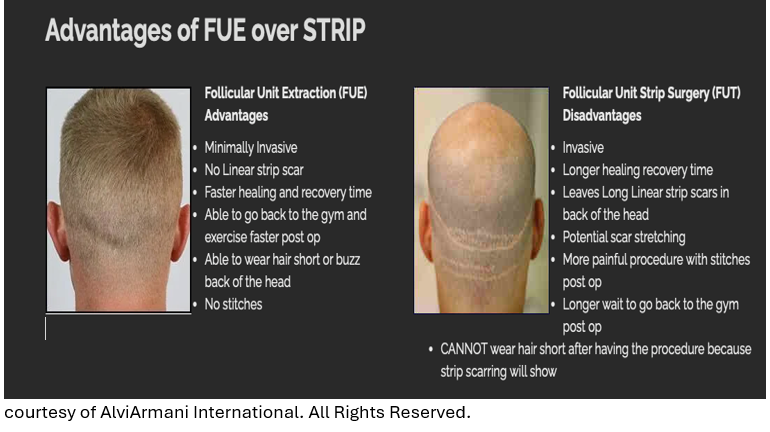
Follicular Unit Strip Surgery or FUSS/FUT takes a strip of follicles from the non-balding area. This area is then sutured back together. The strip is dissected into individual follicles which are subsequently implanted in the recipient area. The major advantage of this procedure is ease of use for the practitioner. The biggest disadvantages include scarring, delayed recovery and injury to the donor region for future procedures.
FUE
Follicular Unit Extraction or FUE involves taking each follicle independently for preparation, treatment and subsequent placement. This procedure is a much more time consuming and tedious procedure for the practitioner. The majority of practitioners cannot achieve greater than 2000 grafts in a single session. This leads to the patient requiring multiple procedures.
There are select clinics that perform mega sessions, defined as sessions greater than 3500 in one sitting. However, because of the technical difficulty and the rarity of this skill these practitioners, and those cases generally fall on the higher end of the cost range.
No-Shave Vs. Shave
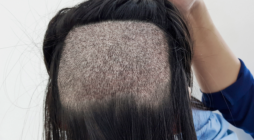
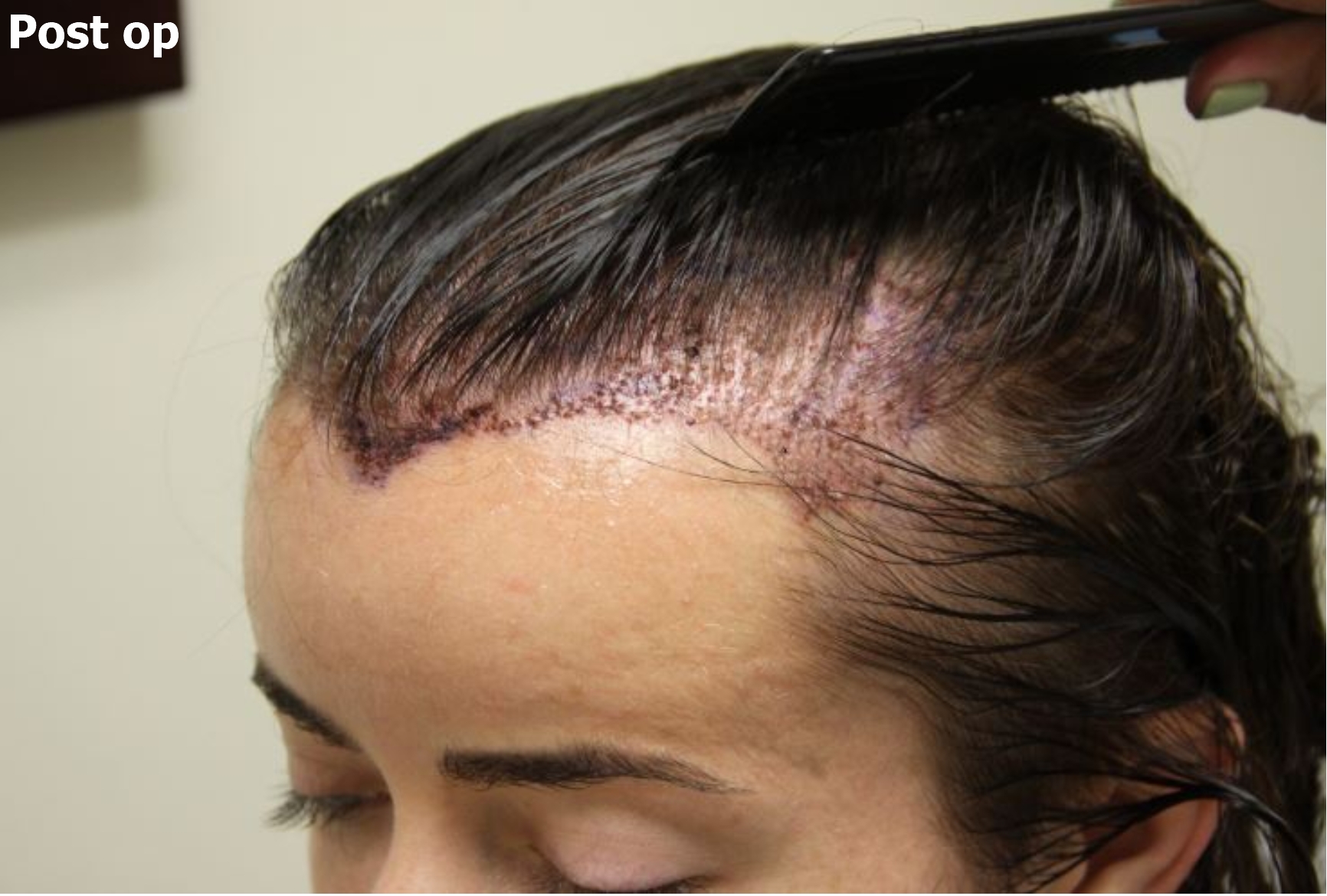
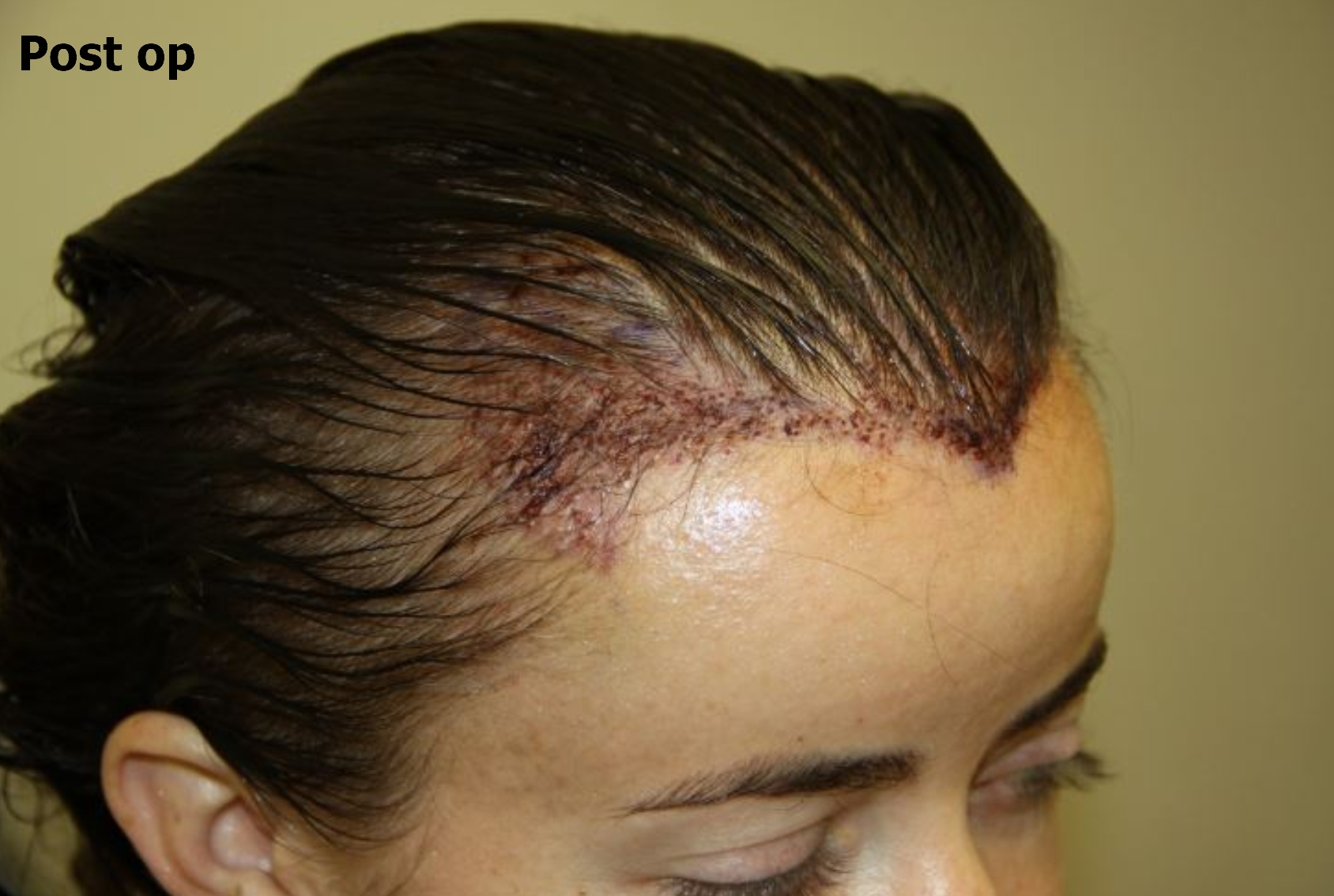
Generally, for best outcomes, it is recommended to shave your head for the hair transplantation. This may not be an option for women relative to men. As such no-shave procedures become critically important for gender specific hair transplantation. No-shave procedures are technically more difficult to perform and less practitioners are able to perform them. As such, those cases fall on the higher range of the spectrum.
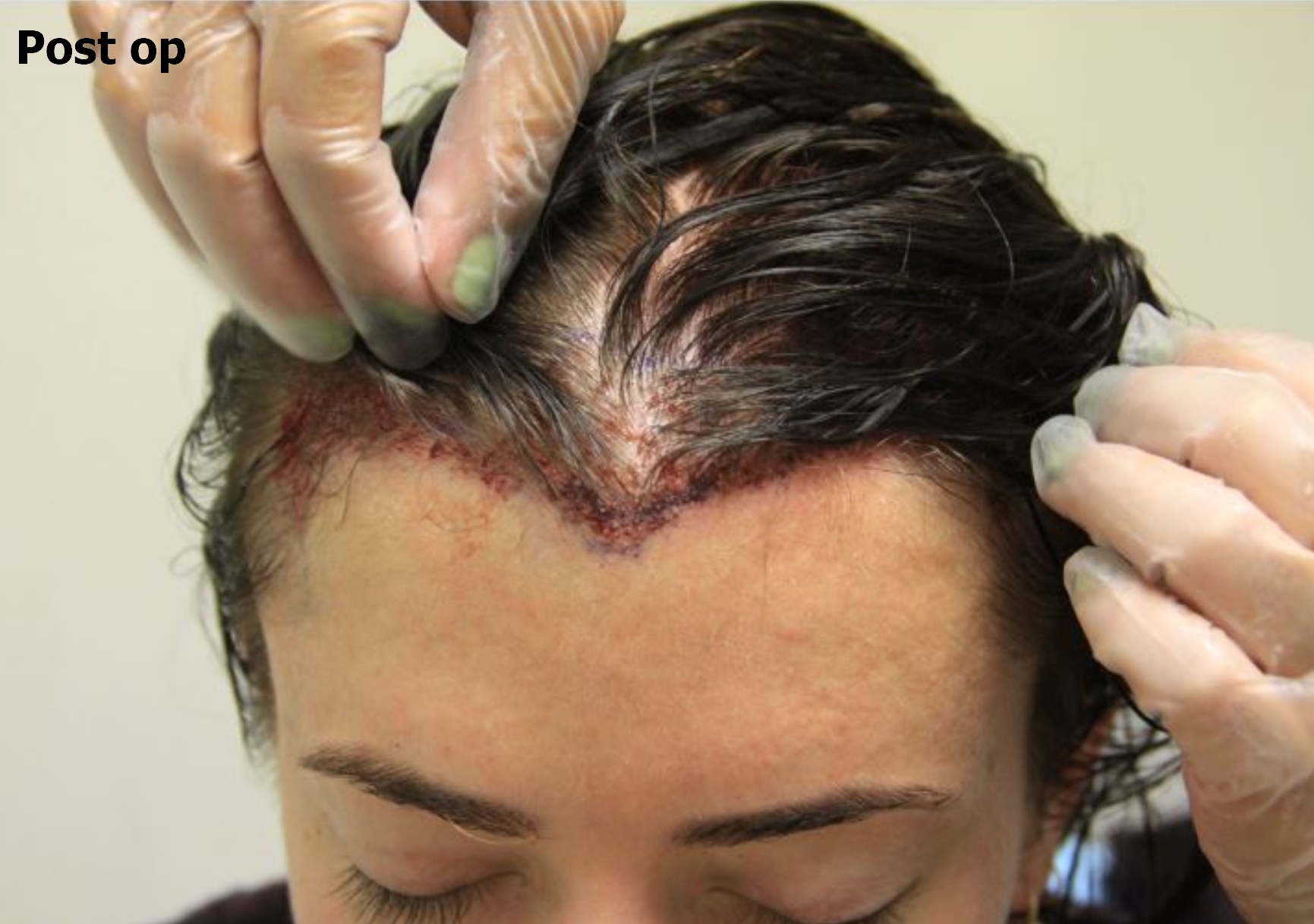
Courtesy of AlviArmani International. All Rights Reserved.
Provider vs Robot
A big advancement to the field of hair transplantation has been the advancement of robot tools. This has decreased the barrier of entry to the field, allowing more practitioners to become transplant surgeons. This thereby has decreased prices and made hair transplantation more accessible.
Robotic procedures are generally on the lower end of the range. Their major limitations are speed and hence number of grafts in a session. While improvements are being made, their transection rates are less desirable than some of the best non-robotic clinics. Transection rate is the rate at which follicles are harvested from the head that are not viable to be implanted. The best practitioners have less than 2% transection rate with the theory that each hair lost is an opportunity lost. Initial studies in robots demonstrated transection rates higher than 10%. More recent numbers report higher end machines have rates between 6-10%. There will be continued improvement on robots in regard to transection rates and efficiency into the future.
Within the cohort of providers that do manual FUE with automated rotor tools, the practitioners that are involved in more parts of the procedure are generally more skilled and more expensive.
Design Capabilities
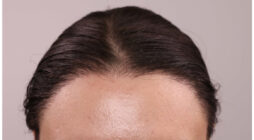
With the increase in offerings for hair transplantation over the past two decades, hair transplantation now comes in two offerings from a design standpoint. Hair restoration which restores your natural hair line or hairline reformation, which addresses your hairline.
Facial framing has been reported as being a crucial element of facial beauty since Leonardo DaVinci first described the patterns in the La Divina Proporzione. Providers and clinics that have mastered facial dimensions and built systems for optimizing facial ratios are able to transform the overall look with proper hairline framing of the face.
Of note, proper facial framing requires the provider to have skill in the most technically difficult design feature in hair transplantation: temple angle closures.
Providers with these skills and cases that are reconstructing hair lines are often sought out by celebrities and executives. These cases generally cost more than the average hair transplant procedure.
Procedure Add-Ons
There are a number of offerings that various clinics may offer that can improve outcomes but also increase price. Here is a list of some of these.
VIP Packages: Exclusive and Personalized Experiences
There are many clinics offering VIP packages. These packages usually involve:
- Single patient case days
- Skeleton staffing and pseudonym implementation for anonymity
- Travel and pick-up options
- In-home follow up procedures
- Involvement of provider within whole case
- Provider phone access
- Schedule follow up visits with provider
- Management of hair maintenance program
- Concierge availability
PRP: Enhance the Healing Process and Improve Results
Studies have demonstrated improved results and healing post hair transplantation with concomitant platelet-rich plasma, or PRP, utilization. Most reputable clinics will include this in the packaging. There is a wide range of efficacy in terms of methodologies utilized to obtain PRP. Costs usually range from $500-$2,500.
Exosomes: Maximizing Your Hair’s Full Growth Potential
Once regarded as simple waste, exosomes have become a darling of the research world over the last decade. The hair industry is no exception to this research. Exosomes have been shown to improve hair density and quality. However, they remain unapproved for hair growth by the FDA.
Proceed with caution as there are many distributors of exosomes available. Standardization has yet to be developed in the field. While no short-term side effects have been found and many beneficial purposes have been observed, long term studies are not yet available.
Ask your vendor who they are using as an exosome manufacturer and what quality control measures they have in place. Also ask your vendor if they have data available, or how they confirmed the efficacy of the product.
Intraoperative and Postoperative Solutions
Intraoperative solutions have traditionally been used for hair transplantation to lead to anesthesia, raise the epidermis and more recently to nourish the follicles and improve outcomes. Intraoperative solutions and postoperative solutions have been shown to have significant impact on time to result, donor preservation, graft survival and healing time.
Ask your vendors what they use for their intraoperative and postoperative solutions and what quality testing they have performed.
Mega Sessions
Procedures are generally performed over several sessions for advanced hair loss. One reason for this theoretical: The diverting of blood flow to more than one place on the scalp may be a detriment to outcomes. Another reason is logistical, particularly as it relates to FUE: many clinics do not have capability of going beyond 3000 grafts.
Clinics that are able to go beyond such concerns are often more sought after and charge higher prices. A mega session that harvests more than 4000 grafts can be physically taxing, and may cost $35-40k per case.
Results, Results, Results
The more results published generally the more experienced the clinic. The more experienced the clinic, the more established the science and processes and the better the product.
Look for clinics that have been around before 2010 for best outcomes. Clinics that have associated research groups are a plus. Most importantly, make sure you evaluate the results, and they match your taste and style.
Clinics with the most published photos are generally the most sought after. As such, their prices may fall above the national average in cost.
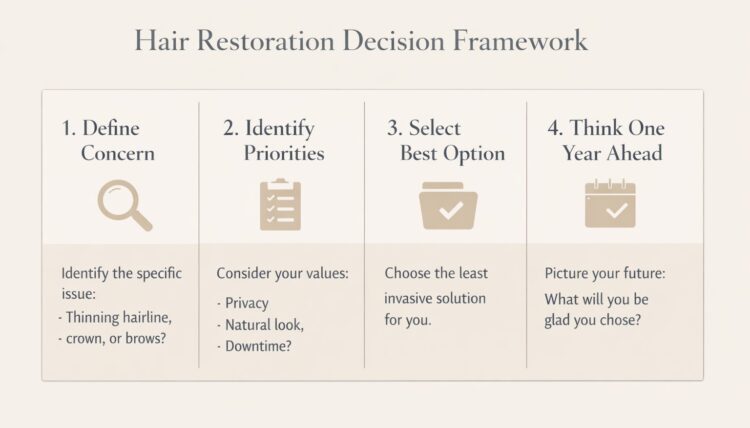
In Conclusion
Hair transplantation has advanced tremendously in the last two decades. Market education has not matched the science advancement. This is particularly true for women. The increase in offerings in the hair transplant industry have gradually made it more and more accessible and affordable. In choosing the right practitioner for you, there are features to evaluate from both a potential cost and quality perspective. These offerings will bring necessary market education which will push the next growth phase in the hair transplantation revolution, a gender specific growth phase about, and for, women.
Sources
Dhami, L. Psychology of Hair Loss Patients and Importance of Counseling. Indian Journal of Plast Surg. 2021; 54(4):411-415
Razmi, M. Hair Transplantation a Brief Review. Clinical Dermatology Review. 2022; 6(2):80-87.
Schmitt J V et al. Hair Loss perception and symptoms of depression in female outpatients attending a general dermatology clinic. 2012;87(3)412-417.
Knoedler Leonard et al. Hair Transplantation in the United States: A Population-based Survey of Female and Male Pattern Baldness. 2023; 11(11): e5386
Eflein J. Total Cost of a Hair Transplant in Select Countries World Wise in 2020 and 2021. Available at https://www.statista.com/statistics/1233463/hair-transplant-total-cost-selected-countries/