

FUE Hair Transplant for Women: Frequently Asked Questions
Clear answers about candidacy, differences vs. men, recovery, risks, alternatives, cost, and results.
Hair loss affects millions of women, often impacting self‑esteem and quality of life. FUE hair transplantation offers a minimally invasive, highly customized way to restore hair and confidence. As Stephanie Garcia, Master Technician at AlviArmani Beverly Hills, says:
“Hair loss in women is deeply personal. FUE allows us to restore not just hair, but confidence.”— Stephanie Garcia
This FAQ answers the most common questions about female hair transplants, from candidacy to cost, recovery, alternatives, and risks. For broader context, see our pillar page: Hair Transplants for Women.
Frequently Asked Questions
1) What is an FUE hair transplant for women?
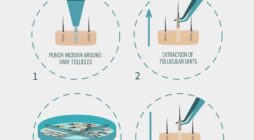
An FUE hair transplant procedure involves extracting individual healthy hair follicles from the back of the scalp and placing them into thinning or balding areas. For female patients, this surgical procedure is adapted to account for different hair loss patterns and aesthetic goals compared to men.
— Stephanie Garcia
2) How does the FUE hair transplant procedure for women differ from that for men?
Women often experience more diffuse thinning rather than defined bald spots seen in male pattern baldness. As a result, the hair transplant surgeon must consider hair density preservation, strategic donor harvesting, and softer hairline design. In many cases, women prefer No‑Shave FUE, which uses small incisions for a discreet approach.
— Stephanie Garcia
3) Who is a good candidate for FUE as a woman?
Ideal candidates are women who:
- Have stable donor supply and no severe medical conditions that impair healing
- Experience female pattern baldness or other types of hair loss such as traction alopecia from tight hairstyles
- Want to avoid a linear scar from older strip methods
A consultation will determine if your type of hair loss makes you suitable for surgery.
4) Can FUE hair transplant be used to treat all types of female hair loss?
FUE can successfully address androgenetic alopecia, temple recession, hairline lowering, and certain cases of alopecia areata. However, conditions like active scarring alopecia or severe telogen effluvium may require medical treatment before surgery. The cause and extent of hair loss are critical factors in determining suitability.
5) What questions should women ask their surgeon before deciding on FUE?
- What is your experience with female hair transplants?
- How many number of grafts will I need for my goals?
- Will I need a No‑Shave option?
- What is the expected recovery process?
- How do you ensure optimal results for female hairlines?
- What non‑surgical therapies should I combine with surgery for the best results?
6) Are there any alternatives to FUE hair transplant for women, and how do these compare in terms of effectiveness?
Yes. Alternatives include follicular unit transplantation (FUT), which involves removing a strip of scalp, as well as non‑surgical options such as PRP therapy, exosome therapy, low‑level laser therapy, and topical growth solutions. FUT can achieve similar results but leaves a linear scar. Non‑surgical methods may improve hair density but are generally less permanent than transplanted follicles.
7) Can women have a No‑Shave FUE procedure?
Yes. No‑Shave FUE allows small incisions to be made without shaving the donor area, keeping the process discreet and enabling women to resume normal activities sooner.
— Stephanie Garcia
8) How many grafts do women usually need?
The number of grafts depends on the extent of hair loss, recipient sites, and hair characteristics. Hairline refinement may require 800–1,200 grafts, while more widespread restoration could need 2,000 or more.
— Stephanie Garcia
9) How much does an FUE hair transplant typically cost for women, and do costs vary by location?
Yes — hair transplant cost can vary widely depending on location, clinic reputation, hair transplant surgeon expertise, and the total number of grafts. Urban centers or high‑demand specialists may charge more, but cost should never outweigh the importance of achieving natural results. See our guide: Can You Afford the Cost of a Hair Transplant?
10) What is the recovery like after FUE?
The recovery process is generally fast. Most women return to normal activities in 5–7 days. Redness and mild swelling usually subside within the first week. Following post‑op instructions helps ensure optimal results.
11) When will I see new hair growth?
Months 1–3: Transplanted hair sheds — part of the hair growth cycle
Months 4–6: Early growth begins
Months 7–12: Thickening and coverage improve
Months 12–18: Final, permanent outcome
12) What risks or complications should women be aware of before considering FUE?
FUE is generally safe, but possible side effects include temporary redness, swelling, numbness, mild shock loss, or folliculitis. Choosing an experienced surgeon minimizes these risks and ensures the best results.
13) Is the transplanted hair permanent?
Yes — FUE is considered a permanent solution. The transplanted follicles are resistant to hormonal thinning and will grow for life. Maintenance treatments may help preserve surrounding hair.
14) How do I begin the process?
Your journey starts with a consultation where a hair transplant surgeon reviews your hair loss patterns, medical history, and goals to create a custom plan for the best results.
— Stephanie Garcia
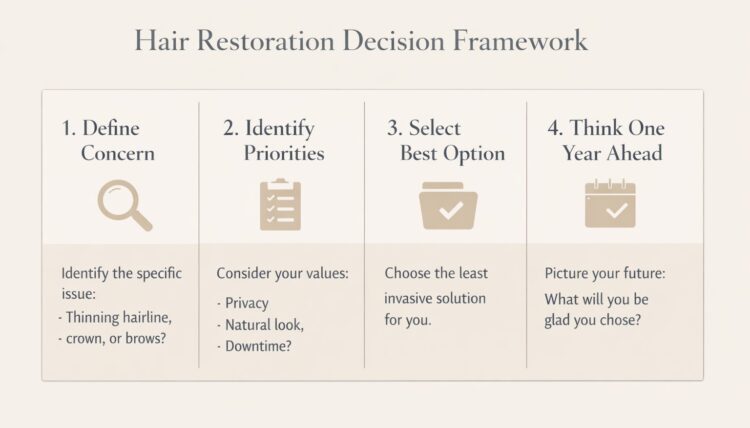
15) When do I know it is the right time?
Hair is personal. Women often delay there hair restoration decisions. Be intentional about your goals and desires.
— Stephanie Garcia